
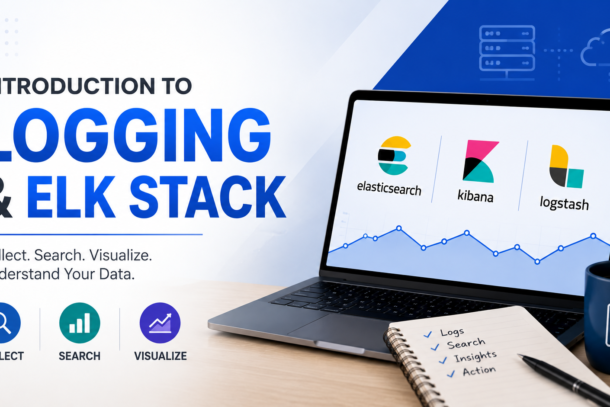
Introduction to Logging & ELK Stack
Transforming technical reference content into a structured, facilitator-ready learning experience.
Project Snapshot
- Primary Category
- Instructor-Led Learning
- Subcategory
- Technical Training
- Learning Context
- Corporate Learning
- Domain
- DevOps & System Monitoring
- Industry
- Information Technology
- Deliverables
- ILT Storyboard and Facilitator & Design Guide
- Role
- Learning Design Architect
- Tools
- Microsoft PowerPoint and Microsoft Word
Project Overview
This project transformed technical source content on logging and the ELK Stack into a structured Instructor-Led Training experience.
The design moved beyond isolated definitions to help learners understand why logging matters, how the ELK Stack components connect, and how the system supports monitoring and troubleshooting. The completed solution balanced technical clarity, learning progression, and facilitator support.
Instructional Challenge and Design Response
The content included several connected technical concepts. The design challenge was to simplify the learning without reducing its accuracy or operational relevance.
Learning Design Process
A focused five-stage workflow converted the source material into a coherent, facilitator-ready learning experience.
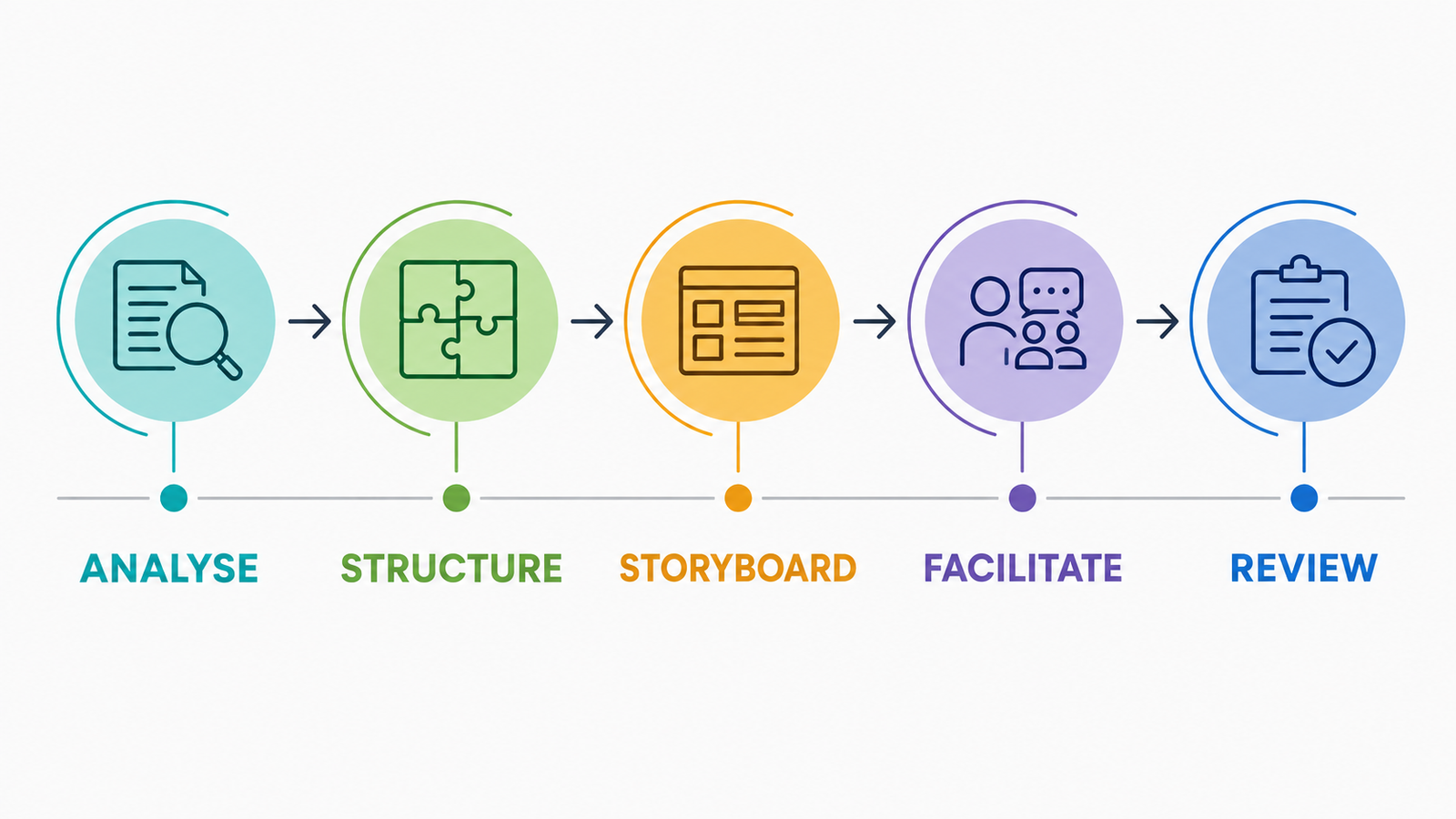
Analyse
Reviewed the source material and identified key concepts, dependencies, and technical terminology.
Structure
Organised the content into a logical progression from foundational concepts to system application.
Storyboard
Built slide-level learning architecture with one clear instructional purpose for each slide.
Facilitate
Added narration direction, transitions, engagement prompts, and facilitator delivery cues.
Review
Checked technical accuracy, pacing, cognitive load, and alignment between content and visuals.
Deliverables
ILT Storyboard
Slide-level learning purpose, facilitator guidance, visual direction, and engagement.
Facilitator & Design Guide
Supporting guidance for narration, delivery, engagement, and visual treatment.
Presentation Flow
A logical sequence from foundational concepts to connected system understanding.
Visual Direction
Recommended diagrams, workflows, and examples for technical explanation.
Engagement Prompts
Questions and reflection points designed to encourage active participation.
Skills Demonstrated
- Learning Architecture
- Instructional Sequencing
- ILT Storyboarding
- Technical Content Simplification
- Cognitive Load Management
- Facilitator Enablement
- Visual Learning Design
- Learner Engagement Design
- Quality and Alignment Review
Value Delivered
- Guided learners from foundational concepts to practical understanding.
- Improved alignment between learning flow, narration, and visuals.
- Supported more consistent facilitator delivery.
- Created purposeful opportunities for learner participation.
- Provided a clear foundation for presentation development and delivery.
Reflection
Technical learning becomes more effective when complex concepts are sequenced clearly, visually supported, and designed for facilitation rather than simple information display.
Need a Learning Solution for a Complex Topic?
I help organisations turn technical, academic, and business content into structured learning experiences that are clear, engaging, and ready to deliver.