Quest to Cybertron Game Based Workflow Assessment
Project Overview

Designing a game-based interactive assessment for corporate technical customer service technicians in the telecom networking domain.

The experience evaluates on-the-job decision-making within a customer support workflow, using scenario-based challenges and game mechanics to reinforce correct behaviors while keeping learners engaged.

Designing the Experience

This project was designed as a performance-focused assessment, not a traditional quiz.

Learners take on the role of a customer service technician navigating real-world support scenarios involving residential gateways, reboot/reset decisions, expectation setting, and dispatch workflows. Progression through the experience depends on making correct decisions at each step.

Game elements—such as levels, challenges, visual progression, and rewards—are used to motivate engagement without distracting from instructional intent.

Client Context

The client needed an engaging way to assess whether customer service technicians could correctly apply a defined troubleshooting workflow during live customer interactions.

Traditional knowledge checks were insufficient to evaluate:

  • How technicians set expectations with customers

  • Whether they followed workflow guidance correctly

  • How decisions impacted resolution outcomes

The solution needed to function as an on-the-job assessment that felt motivating rather than punitive, while still reflecting real telecom support scenarios.

What this asset is (and isn’t)​

It is:

  • A game-based, scenario-driven assessment

  • Focused on real-world telecom customer support workflows

  • Designed for corporate technical support technicians

  • Built to reinforce correct decision-making through consequences and feedback

It is not:

  • A content-heavy instructional course

  • A standalone game without performance intent

  • A generic quiz or test bank

  • A replacement for workflow tools or live systems

Design Approach​

The experience is structured across four levels, each containing multiple challenges that reflect realistic customer support situations.

Each challenge presents a decision point aligned to the support workflow. Learners must choose appropriate responses related to rebooting, resetting, dispatching technicians, and setting customer expectations.

Immediate feedback is provided through:

  • Correct and incorrect response layers

  • Visual consequences tied to the game narrative

  • Reinforcement messaging that explains why a choice works or fails

Progression through the experience requires correct decisions, culminating in successful completion and reward recognition.

Key Components

  • Scenario-based challenges aligned to telecom support workflows

  • Multiple decision paths with consequence-based feedback

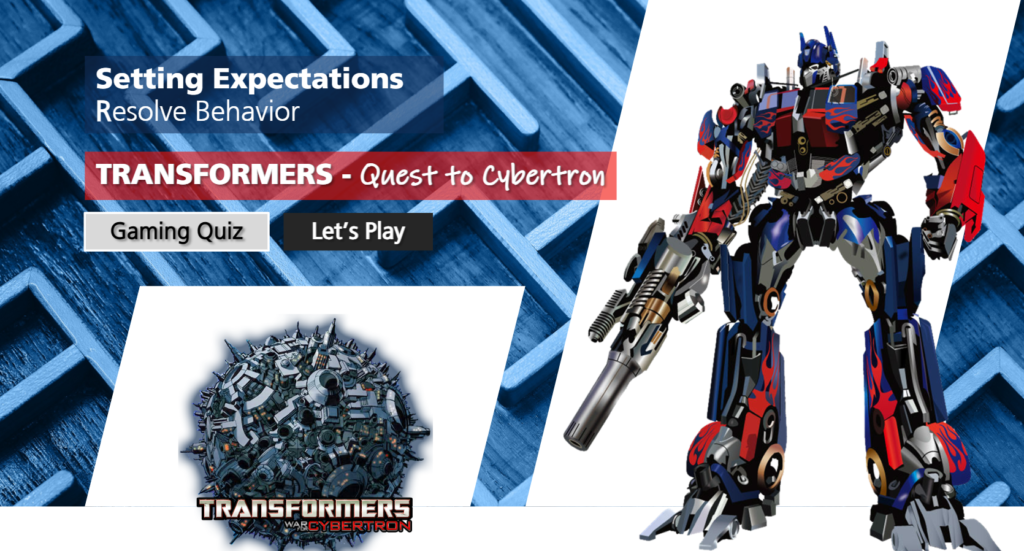
  • Visual progression using a maze-style journey

  • Level-based structure with gated advancement

  • Final results screen with score, pass criteria, and completion badge

Role & Contribution

I designed the complete learning experience, including:

  • Scenario structure and decision logic

  • Question framing aligned to real support workflows

  • Feedback and consequence design

  • Game progression mechanics and completion logic

  • Storyline interaction flow and assessment rules

The work focused on balancing instructional integrity with engagement, ensuring the experience remained both effective and enjoyable.

Outcome

The final experience provides a fun yet rigorous way to assess on-the-job readiness for telecom customer service technicians.

It enables organizations to validate workflow understanding, reinforce correct behaviors, and improve confidence—without relying solely on traditional testing formats.


Reflection

This project demonstrates how game-based learning can be applied responsibly in corporate environments.

When aligned tightly to real workflows, gamification becomes a powerful assessment tool—encouraging practice, reinforcing correct decisions, and making performance evaluation more meaningful for learners.

Description

Game-based, scenario-driven assessment for telecom customer service technicians.