K–12 Water Cycle — Interactive Learning Storyboard
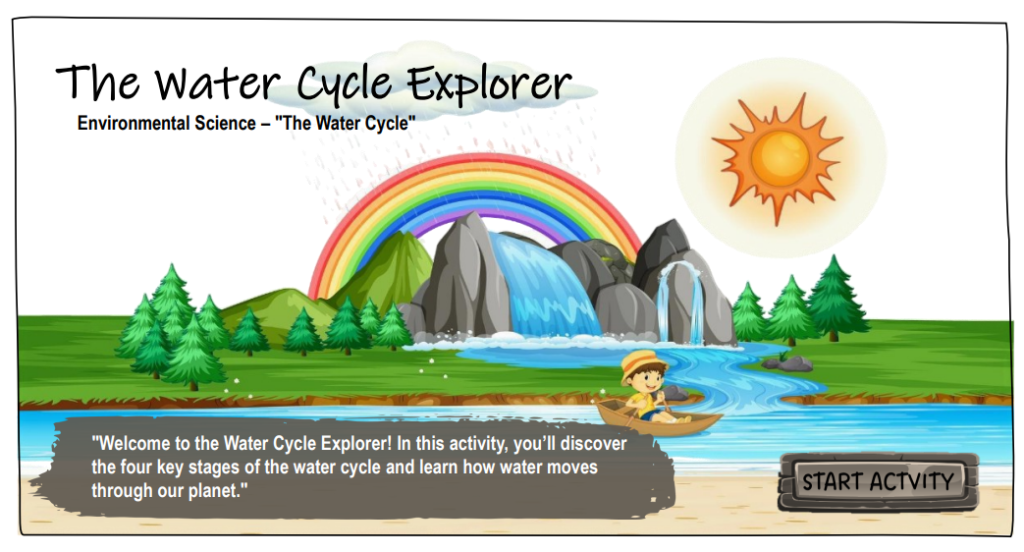
Project Overview

Designing an instructional storyboard for a K–12 interactive learning activity focused on foundational understanding of the water cycle.

The storyboard defines instructional flow, interaction design, and feedback logic to support concept introduction, practice, and reinforcement before development.

Designing the Storyboard

The storyboard is designed to translate science concepts into a clear, age-appropriate interactive learning experience.

It outlines screen-by-screen sequencing, on-screen text, interaction mechanics, and visual guidance to support consistent implementation during development.

Client Context

The client needs a structured storyboard to guide the development of an interactive science activity for K–12 learners. The activity must explain the stages of the water cycle clearly while keeping learners engaged through interaction.

There is a need to define instructional flow, interaction types, and feedback upfront to avoid ambiguity during development and ensure alignment with learning goals.

What this storyboard is (and isn’t)​

  • It is an instructional storyboard for an interactive learning activity, not a finished asset.

  • It defines instructional intent, interaction logic, and feedback design.

  • It serves as a communication tool between instructional design and development.

  • It is not a lesson plan or assessment blueprint.

Design Approach​

The storyboard follows a learn–practice–check progression. Concepts are introduced through concise explanations supported by visuals, followed by guided practice and knowledge checks.

Interaction types such as click-to-explore, drag-and-drop sequencing, and multiple-choice questions are intentionally selected to reinforce understanding without overloading younger learners.

Key Components

  • Screen-by-screen instructional flow
  • Visual and text guidance for each interaction
  • Drag-and-drop sequencing activity
  • Knowledge checks with feedback logic
  • Closure screen reinforcing real-world relevance

Role & Contribution

I designed the complete instructional storyboard, including learning objectives, interaction sequencing, on-screen text, and feedback logic.

The work focused on ensuring clarity, age appropriateness, and alignment between instructional intent and interactive behavior.


Outcome

The storyboard provides a clear blueprint for developing a consistent and instructionally sound interactive learning activity.

It reduces interpretation gaps during development and supports accurate implementation of instructional and interaction design decisions.


Reflection

This work reinforces the importance of well-structured storyboards in interactive learning design. Making instructional flow and feedback explicit early helps maintain learning integrity through development and delivery.

Description

Instructional storyboard for a K–12 interactive learning activity on the water cycle.